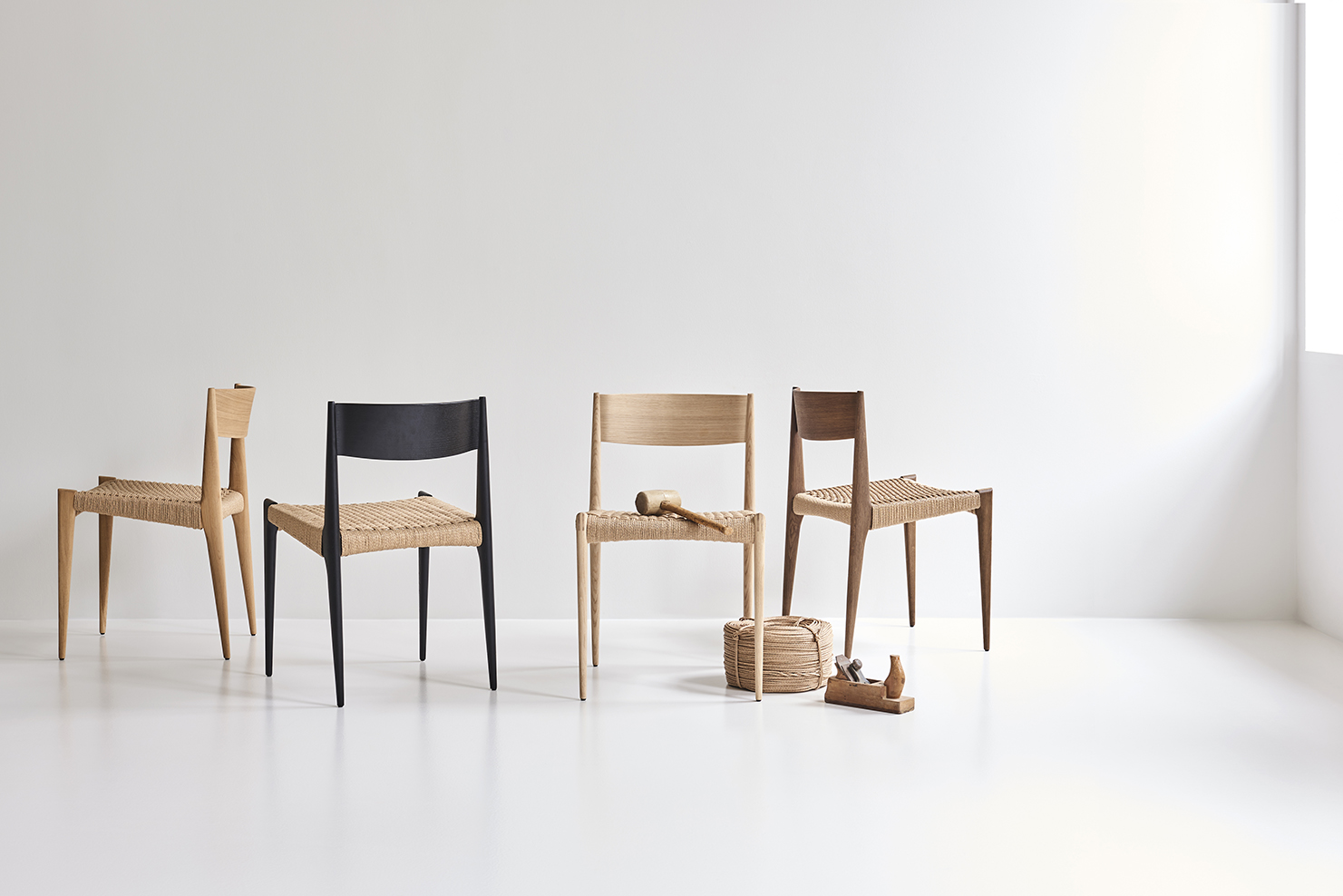
Pia Chair
Design by Poul Cadovius, 1959
As a furniture designer, Poul Cadovius was mostly known for his iconic shelving systems, like the Royal System® from 1948. But with the launch of the dining chair Pia Chair in 1959, he could also add the title chair designer to the CV.
He wanted to create a chair in the spirit of the time, inspired by other design chairs of the fifties, but lighter and more "petite", both in physical weight and in design expression. The chair was developed on a "less is more" concept, with focus on the least possible material consumption, still maintaining a high level of details and excellent comfort.
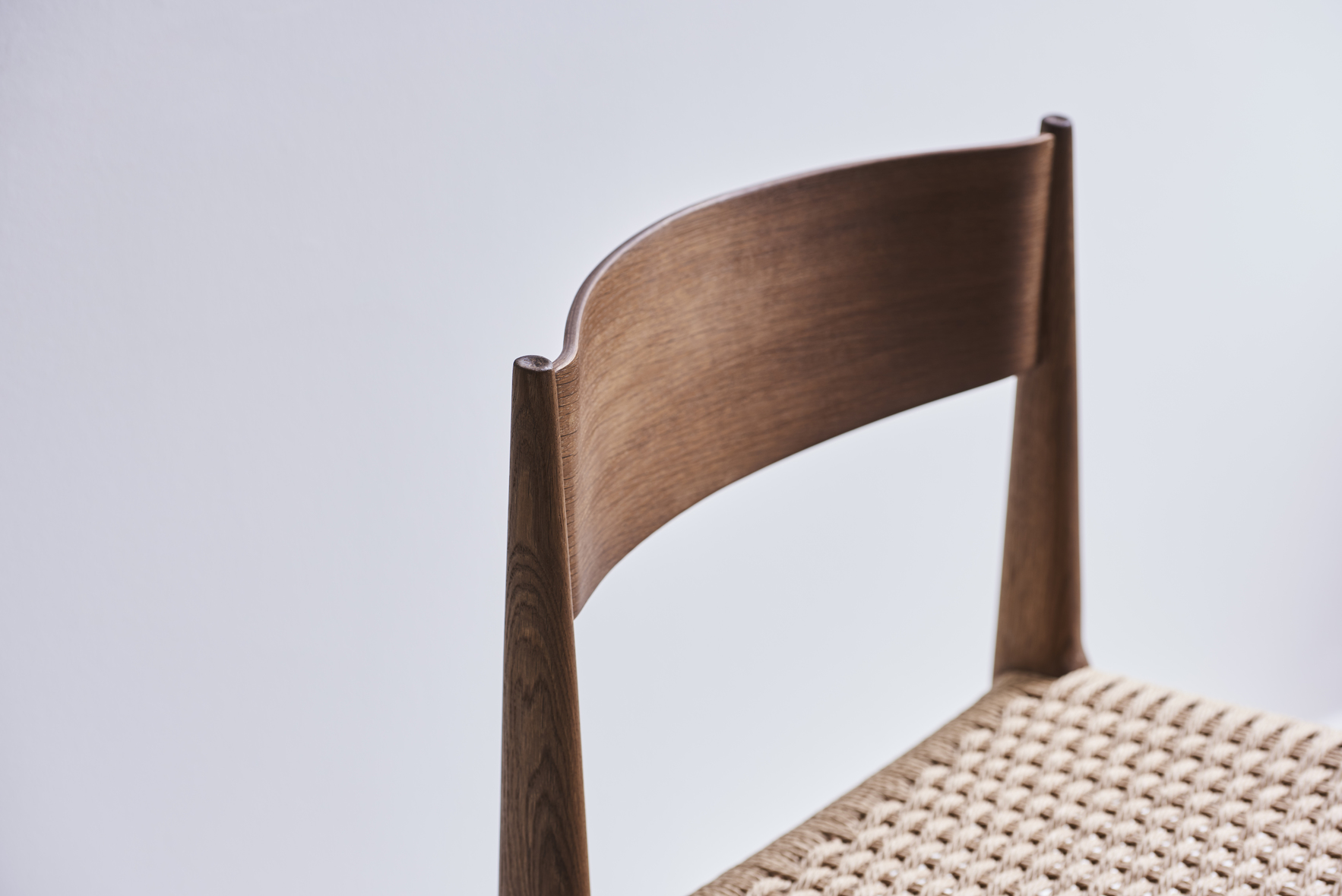
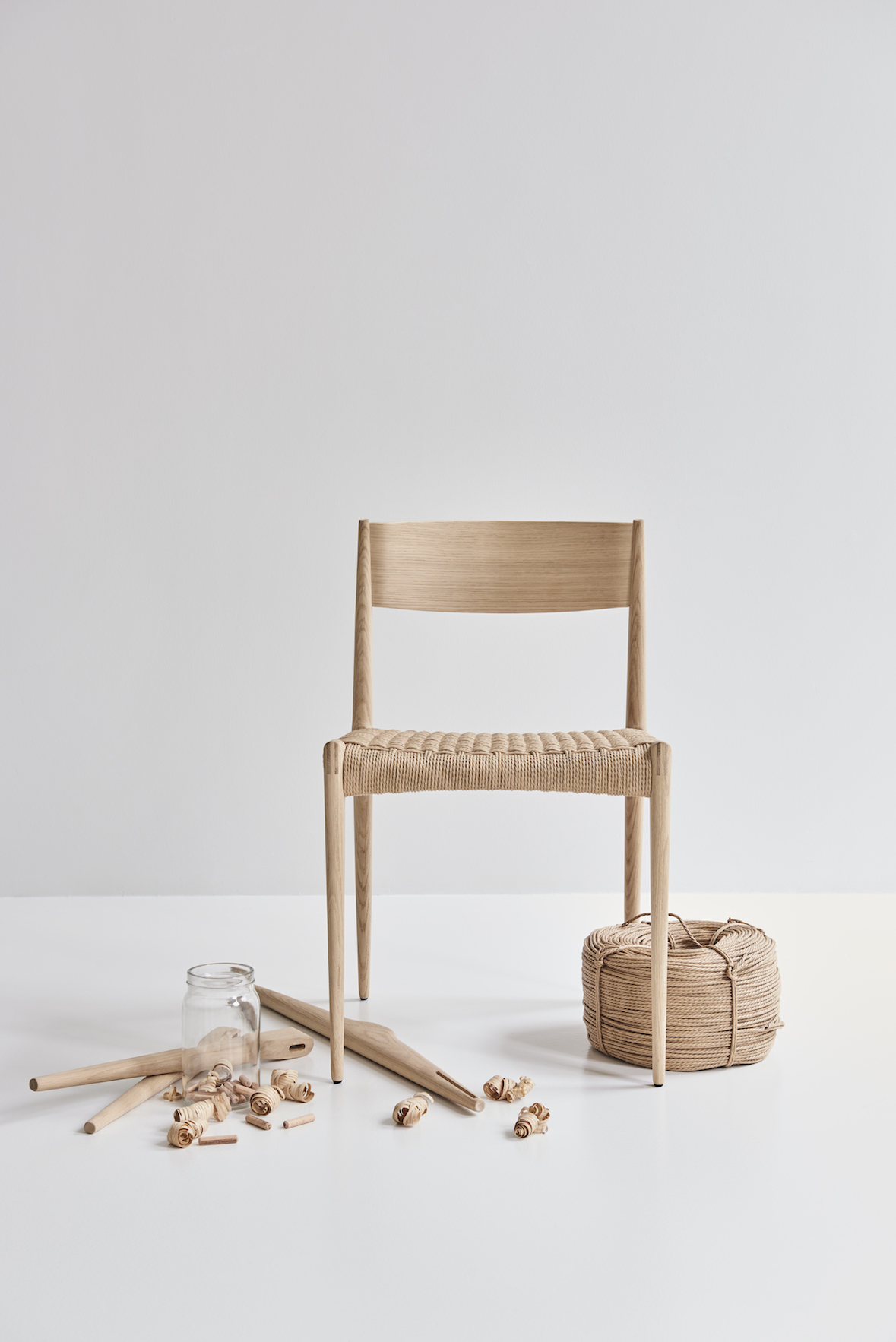
The thin, conical-shaped solid wooden legs give a light visual expression, which is further emphasized by two fine details; the hand-sanded rounding at the top of the back legs, and the finger joined front legs. The seat is made of hand-woven paper cordel, and the backrest is moulded, which gives an optimal seating comfort. It takes two hours just to hand-weave the seat, so the making of the chair is a time-consuming process which requires patience and high accuracy.
-1145x1715.jpg)
Measurements
W 48 x D 49 cm x H 75 cm
Seating dimensions W 48 x D 42 cm x H 45 cm
Materials
Oak, black lacquered oak, smoked oak or walnut
Treatment
Oil, white oil or soap
Seat
Hand-woven paper cordel
Back
Veneer
Information regarding PIA CHAIR
The over-all wood experience with the PIA CHAIR can in general vary on each single chair and from chair to chair, because we unite natural materials such as solid wood (the frame) and veneered wood (the backrest) both vertically and horizontally. In addition, the walnut version of the PIA CHAIR is made of European walnut, where the rest of our walnut furniture is made of US walnut. The US walnut is more consistent than the European walnut. The latter is more wild and inconsistent and therefore more variation in color and structure must be expected.
We reccomend the use of glide or felt nails to maintain the integrity of the chair.
 Sign Up